
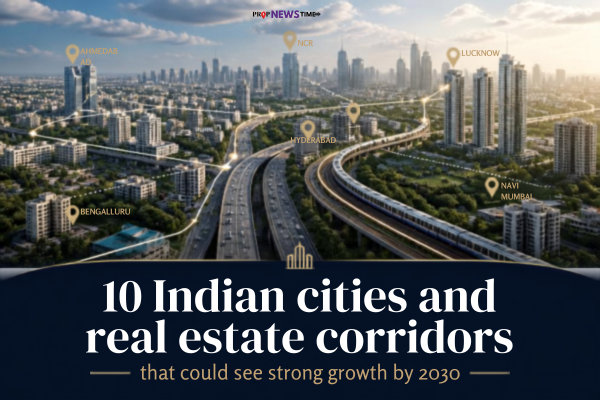
10 Indian cities and real estate corridors that could see strong growth by 2030
Synopsis
India’s next phase of real estate expansion is increasingly being shaped by infrastructure investment, airport-led development, technology and GCC activity, industrial corridors and tourism. From Ayodhya’s pilgrimage economy and the Greater Noida–Jewar corridor to Navi Mumbai’s airport-led expansion, Hyderabad’s western growth axis and North Bengaluru’s airport corridor, several markets are attracting developers and investors. Emerging Tier-2 centres such as Lucknow, Indore, Coimbatore and Kochi are also gaining attention as connectivity, employment and urban infrastructure improve. The following 10 markets highlight the principal factors likely to influence their real estate trajectories through 2030.
India’s real estate growth over the next few years is expected to extend beyond the established metropolitan markets, with infrastructure projects, airports, industrial investment, technology employment and tourism creating new development corridors. Ten cities and regions stand out for the scale or diversity of these growth drivers, although the pace of development will vary across individual micro-markets.
Ayodhya, Uttar Pradesh
is emerging as a tourism-led real estate market following substantial investment in connectivity and visitor infrastructure. The expansion of Maharishi Valmiki International Airport, improvements to highways and the addition of hotels and other hospitality facilities are supporting development around the city. Land and commercial activity along the bypass and peripheral areas have attracted greater attention as the city’s visitor economy expands.
Greator Noida / Jever Corridor
, the development of Noida International Airport is the principal catalyst. The Yamuna Expressway corridor is also attracting industrial and logistics projects, while the proposed International Film City is expected to add another economic activity cluster. Residential development, plotted projects and logistics assets are therefore gaining prominence along the corridor.
Navi Mumbai
is being supported by a combination of large-scale transport infrastructure and airport development. The Atal Setu has improved connectivity between Mumbai and Navi Mumbai, while Navi Mumbai International Airport is expected to strengthen the region’s aviation and commercial infrastructure. Panvel, Ulwe and Kharghar are among the areas attracting township and residential development.
Hyderabad
continues to expand westwards, particularly around Kokapet, Neopolis, the Financial District and Tellapur. The city’s availability of developable land, office expansion and growing GCC presence are supporting demand for both commercial and residential assets. Infrastructure around the Outer Ring Road has also enabled development to extend into previously less-developed areas.
North Bengluru
, the airport corridor centred on Devanahalli is becoming an important growth axis. Kempegowda International Airport, technology and manufacturing activity, planned infrastructure and the proposed Peripheral Ring Road are supporting residential, commercial and industrial development. Hebbal and Devanahalli are among the markets benefiting from this northward expansion.
GIFT City & Ahmedabad
represent another infrastructure- and employment-led market. GIFT City’s International Financial Services Centre has attracted banks, financial services companies, fintech businesses and other institutions. The Ahmedabad-Gandhinagar belt is consequently seeing demand for Grade-A offices, supporting commercial infrastructure and residential developments.
Lucknow
is gaining importance through its proposed State Capital Region, transport infrastructure and industrial development. Ring roads, metro connectivity and the presence of defence manufacturing activity are expected to support expansion along corridors including Sultanpur Road and Amar Shaheed Path.
Indore
has emerged as a major commercial centre in central India, supported by its infrastructure, industrial base and expanding IT activity. Development along the Super Corridor has added a new technology and employment-led growth axis, while highway connectivity is strengthening the city’s regional linkages.
Caoimbatore
is diversifying beyond its traditional manufacturing and textile base. The city’s industrial ecosystem, expanding IT and services sector, healthcare infrastructure and emerging senior-living segment are creating additional sources of real estate demand. Its established economic base also provides a foundation for continued commercial and residential development.
Kochi
combines technology, logistics and transport infrastructure as its principal growth drivers. The Water Metro has strengthened the city’s multimodal transport network, while Infopark’s expansion continues to support employment-led development around Kakkanad. Kochi’s maritime infrastructure and logistics role provide an additional demand base for commercial and residential real estate.
Across these markets, the underlying growth drivers differ considerably. Airport-led corridors such as Jewar, Navi Mumbai and North Bengaluru are closely linked to transport infrastructure, while Hyderabad and GIFT City are being driven substantially by employment and corporate activity. Ayodhya’s trajectory is more closely associated with tourism, whereas Lucknow, Indore, Coimbatore and Kochi combine infrastructure investment with established economic or institutional bases.
Sources JLL India, Knight Frank India, ANAROCK, CBRE South Asia
Source: Prop News Time
